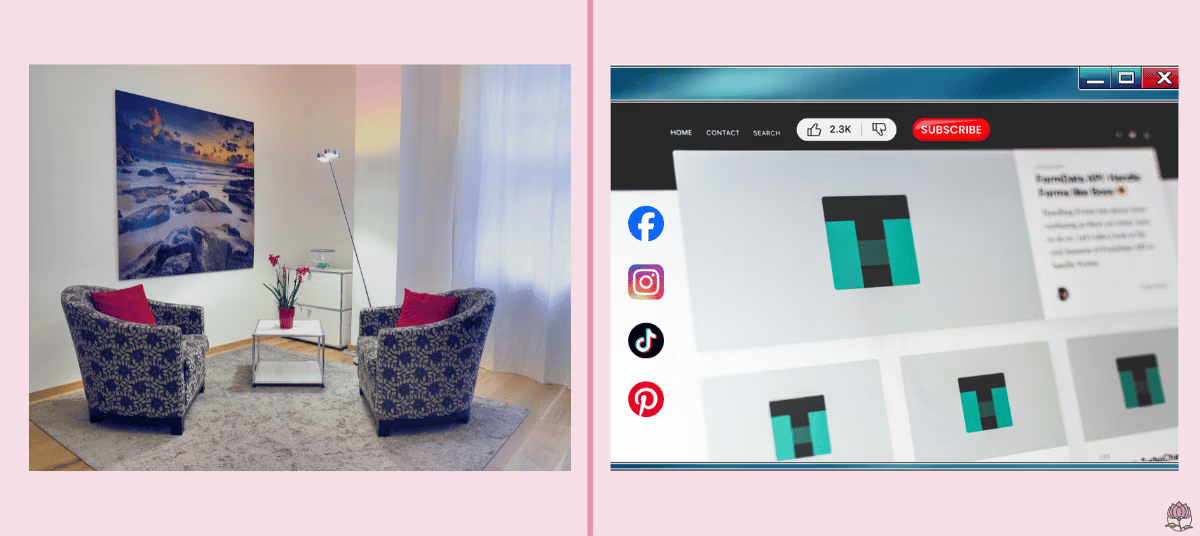
Many therapists spend significant time shaping the atmosphere of their physical office.
The lighting is warm rather than harsh.
The seating is comfortable but not distracting.
The space is quiet, calm, and private.
None of these choices are accidental.
Therapists understand that environment influences how safe people feel when they begin talking about difficult parts of their lives.
What is less often discussed is that a therapist’s website plays a similar role.
For many potential clients, the website is the first place they encounter you.
Before they write an email or make a phone call, they spend a few minutes reading, looking, and quietly asking themselves whether it feels safe enough to reach out.
That moment matters more than most therapists realize.
A Therapist Website Is Not Just Marketing
Many website design tools treat every website as if it serves the same purpose: promoting a service and converting visitors into customers.
This approach works well for many businesses.
Restaurants want reservations.
Online shops want purchases.
Consultants want inquiries.
But therapy is different.
The person visiting a therapist’s website is often uncertain, hesitant, or emotionally vulnerable.
They are not simply comparing services.
They are deciding whether it feels safe enough to speak openly with another human being.
Because of this, the website functions less like a marketing page and more like a digital waiting room.
The tone, structure, and design of the site quietly shape the first impression a potential client forms.
The Psychology of Digital First Impressions
Research consistently shows that people form judgments about websites extremely quickly.
In one well‑known study, users formed a first impression of a website in as little as 50 milliseconds. [1]
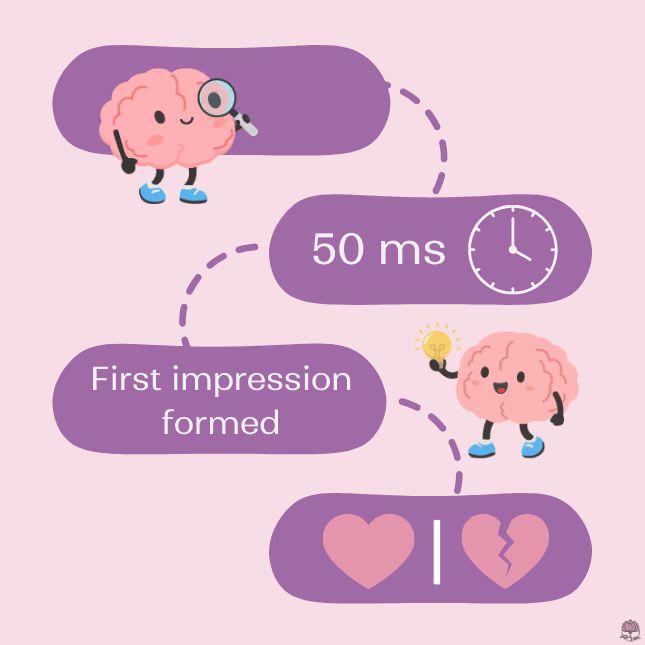
In other words, people begin deciding whether something feels trustworthy before they have even consciously read the text.
A large study from Stanford’s Persuasive Technology Lab found that visual design was the most frequently mentioned factor influencing a website’s credibility. Elements such as layout, typography, color schemes, and imagery were cited by 46.1% of participants as the primary reason they trusted - or distrusted - a site. [2]
Further research on web aesthetics shows a similar pattern. When participants were presented with identical content displayed in two different designs, the version with stronger visual design was judged as more credible in nearly 90% of cases. [3]
Other studies suggest that users form a more complete credibility judgment within roughly three to four seconds. [4]
For therapists, this matters.
A potential client does not arrive at your website as a neutral observer. They often arrive during a moment of vulnerability.
They may be asking themselves quiet questions such as:
Do I feel comfortable here?
Does this therapist seem approachable?
Will they understand what I am going through?
The design and structure of your website begin answering those questions long before the first conversation ever takes place.
Why Templates Often Fall Short for Therapists
Website templates are extremely useful tools.
They allow professionals to launch a website quickly and without technical expertise.
For many industries this works perfectly well.
However, templates are designed to serve many types of businesses at once.
A single template might be used by a café, a photographer, a marketing agency, and a consultant.
Because they must work for everyone, they are built around generic structures and assumptions.
For therapists, those assumptions can conflict with the experience clients need.
The structure might prioritize promotional language over reassurance.
The layout may push visitors quickly toward booking forms instead of helping them understand what therapy will feel like.
Even small details like crowded layouts or aggressive calls to action can unintentionally increase hesitation.
Templates themselves are not the problem.
They simply were not designed with the psychological dynamics of therapy in mind.
Designing a Digital Therapy Space
If we think about a therapist’s website as a digital version of their office, the design priorities change.
Instead of focusing primarily on marketing language, the site can focus on creating a sense of clarity and calm.
Instead of overwhelming visitors with information, it can guide them gently through the questions they already have.
For example, many potential clients wonder what will happen during the first session.
They may worry about saying the wrong thing, not knowing where to start, or feeling judged.
A thoughtful website can address these concerns directly.
Simple explanations of how the first session works, what communication will look like, and what clients can expect can significantly reduce uncertainty.
This approach mirrors what therapists already do in their physical offices: lowering the threshold for honest conversation.
Ownership and Control of Your Digital Space
Another reason for therapists to move beyond templates is the question of ownership.
When a website is built on a hosted platform, the structure and infrastructure belong to that platform.
This can affect design flexibility, privacy configurations, and the ability to move the site elsewhere later.
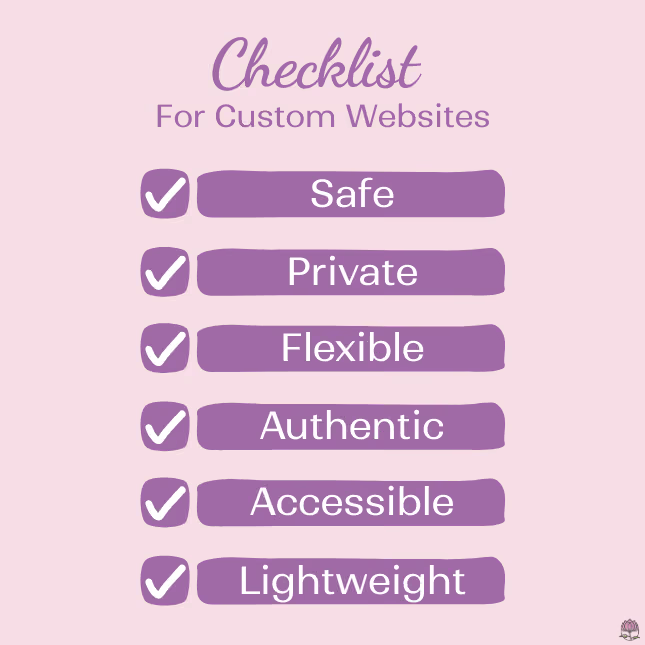
With a custom website, therapists have more control over how the site behaves, how data is handled, and how the environment evolves over time.
For therapists who value independence and privacy, this control is important.
It allows the website to grow alongside the practice rather than being limited by the constraints of a particular platform.
A Website That Reflects the Work You Do
Therapy is careful work.
It requires patience, attention, and respect for the complexity of human experience.
A therapist’s website should reflect those same qualities.
Rather than feeling like a generic marketing page, it should feel like the digital extension of the therapeutic space itself.
Calm.
Clear.
Respectful of the person arriving there.
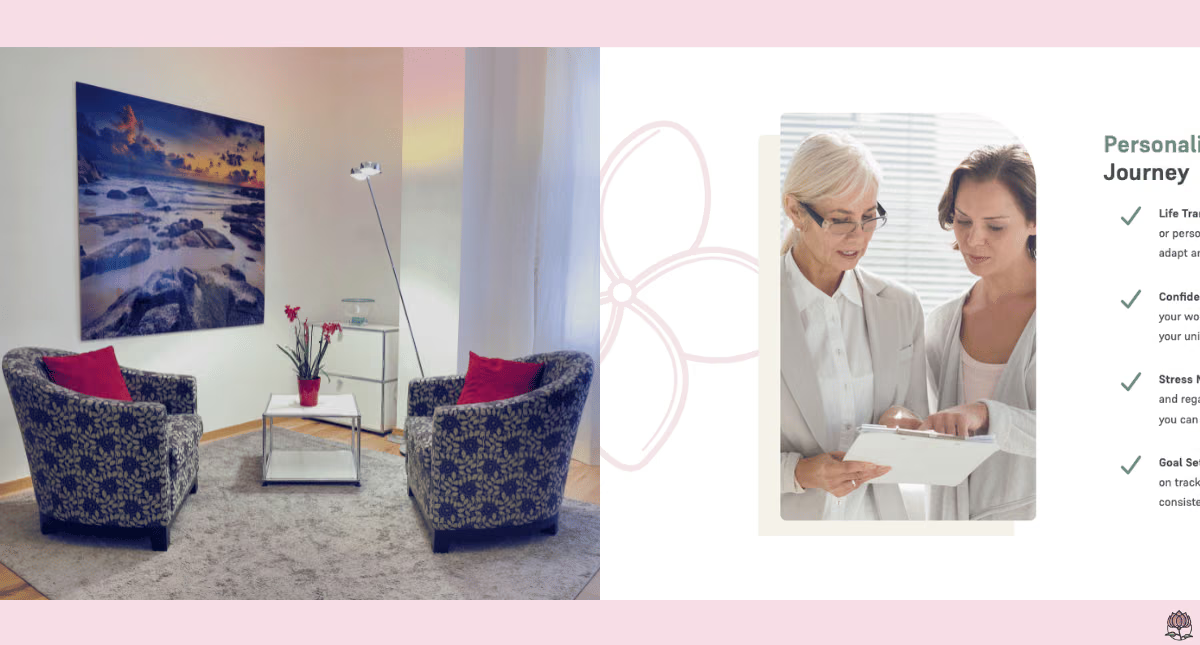
When a website achieves that balance, it can quietly support the moment when someone decides to reach out for help.
That moment is small, but it matters.
And often, it begins long before the first session ever takes place.
If you're curious how a carefully designed therapist website might support that first step, you can explore my work at Therajava or schedule a short introductory conversation.
References
[1] Lindgaard, G., Fernandes, G., Dudek, C., & Brown, J. (2006). Attention web designers: you have 50 milliseconds to make a good first impression. Behaviour & Information Technology, 25(2), 115–126.
[2] Fogg, B. J., Marshall, J., Laraki, O., Osipovich, A., Varma, C., Fang, N., et al. (2001). What makes web sites credible? A report on a large quantitative study. Proceedings of the CHI 2001 Conference on Human Factors in Computing Systems.
[3] Robins, D., & Holmes, J. (2008). Aesthetics and credibility in web site design. Information Processing & Management, 44(1), 386–399.
[4] Alsudani, F., & Casey, M. The effect of aesthetics on web credibility.